Knee pain after a twist, fall or gradual wear does not automatically mean you need surgery. You will finish this guide knowing what happens at the first assessment, which scans clarify the diagnosis, how doctors choose between rehabilitation and surgery, and how recovery is staged.
Key takeaways
- Bring details of the injury, symptoms, locking episodes and activities that worsen pain.
- Doctors combine your history, knee examination and imaging to confirm a meniscus tear.
- Treatment depends on tear pattern, symptoms, age, activity and the knee’s condition.
- Rehabilitation exercises and follow-up appointments guide safe recovery after treatment or surgery.
What happens at the first meniscus assessment?
The first appointment starts with your symptom history and how the problem began: a twisting movement, sports collision, fall, squatting episode or gradual onset of pain. Tell the clinician about joint-line pain, swelling, catching, clicking, giving way or true locking, and name the movements that trigger symptoms.
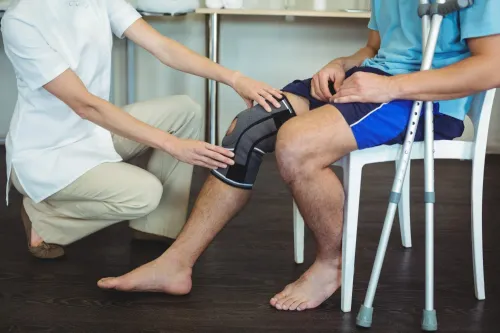
The clinician watches you walk, compares both knees, and checks swelling, bruising, alignment and muscle loss. They measure knee range of motion, feel for joint-line tenderness, and perform stability tests for the ACL, PCL and side ligaments.
McMurray and Thessaly tests can support suspicion of a meniscus tear, but hands-on tests cannot show its exact size or prove that it is repairable.
| Finding | Why it matters | Action |
|---|---|---|
| Knee cannot straighten | A displaced tear may block extension | Seek urgent assessment |
| Unable to bear weight | Could indicate a serious injury | Seek urgent assessment |
| Marked swelling immediately after injury | May signal significant internal damage | Arrange prompt assessment |
| Fever with a hot, red knee | Infection requires urgent treatment | Seek urgent medical care |
| Significant impact with pain | A fracture must be excluded | Obtain urgent assessment |
These meniscus injury treatment steps establish whether you need prompt imaging or a planned diagnostic work-up. This is what to expect during meniscus treatment at the assessment stage: examination first, then imaging when the findings justify it.
How do doctors confirm a meniscus tear?
Doctors confirm a meniscus tear by matching your symptoms and injury history with the examination, not by treating an MRI image in isolation. They first separate meniscus pain from other knee problems.
- ACL injury is more likely after a pivot followed by giving way and rapid swelling.
- PCL injury can follow a blow to the shin or a dashboard-type impact.
- Patellar problems usually cause pain around the kneecap.
- Osteoarthritis causes activity-related pain, stiffness and tenderness in several areas rather than one injury-related joint-line focus.
- Hip disease can refer pain to the knee, so the doctor may check hip movement.
A plain knee X-ray cannot show a meniscus tear. It can reveal a fracture, alignment problem or osteoarthritis, each of which can change the meniscus treatment process.
MRI is the preferred scan when the doctor needs to assess the meniscus, ligaments, cartilage and bone marrow. Ask what the report says about tear location, pattern, displacement, root involvement, meniscal extrusion, cartilage damage and osteoarthritis.
An MRI abnormality is not automatically the pain source. Degenerative meniscus tears often appear alongside arthritis, so the examination and symptom pattern must guide treatment rather than the scan alone. This distinction matters when comparing knee cartilage treatment Mumbai options, because exercise-based physiotherapy may be more appropriate than surgery for degenerative knee disease.
How is the treatment choice made?
Treatment choice depends on whether the tear is acute and traumatic or degenerative, whether the knee genuinely locks, and the tear’s pattern, location and tissue quality. Your age, activity goals, arthritis and ligament stability also affect the meniscus treatment process.
| Option | What it means | When it applies |
|---|---|---|
| Non-surgical care | Activity modification, ice, compression, elevation, appropriate pain relief and physiotherapy | Stable tears without persistent locking, especially degenerative tears with osteoarthritis |
| Meniscus repair | Stabilises the tear while preserving meniscal tissue | A traumatic tear in a repairable area with suitable tissue and blood supply |
| Partial meniscectomy | Removes only the unstable torn fragment | Selected displaced or irreparable tears causing mechanical obstruction |
A stable tear often starts with activity modification and medication prescribed after reviewing your medical history, kidney function, stomach risk, blood pressure and other medicines. Physiotherapy restores motion and strengthens the quadriceps, hamstrings and hip muscles; your therapist advances exercises in stages.
Do not run, pivot, squat deeply or increase resistance simply because pain briefly improves. Use ice for short sessions with a cloth barrier, never directly on skin, and ask before taking medication or exercising through swelling.
Exercise-based physiotherapy is an important first option for many middle-aged or older adults with degenerative tears and osteoarthritis. Arthroscopic partial meniscectomy is not a universal answer. What to expect during meniscus treatment changes when a displaced tear causes genuine mechanical locking or a traumatic tear lies in a repairable area.
What happens if surgery is recommended?
If non-surgical care fails or a tear causes mechanical obstruction, the surgeon reviews your MRI alongside the examination and explains the likely surgical plan. A locked or displaced fragment can make arthroscopy more appropriate than continuing rehabilitation alone.
During arthroscopy, small portals allow a camera and instruments to inspect the joint. The surgeon may repair the meniscus to preserve tissue or remove only the unstable fragment through a partial meniscectomy. The final choice can change after direct inspection.
Repair is more realistic when the tear has:
- Useful blood supply near the outer meniscal zone
- Suitable tissue quality
- A pattern that can be stabilised
- Limited chronic damage
Age, how long the tear has existed, ligament injuries, cartilage damage and arthritis also influence the decision. An MRI cannot guarantee that repair will be possible.
Repair usually means a longer protected recovery, with crutches, restricted weight-bearing, a brace and controlled knee motion under the repair protocol. Return to sport commonly takes several months. After partial meniscectomy, walking and ordinary activities often resume sooner, but swelling, stiffness and quadriceps weakness still require rehabilitation.
When comparing a meniscus specialist Vile Parle patients can access, ask about tissue preservation, expected restrictions and the plan if symptoms continue. For knee cartilage treatment Mumbai patients should also ask how arthritis or cartilage damage affects the outlook.
Dr Dhirav Shah- Orthopaedic Surgeon 8104619499 can help structure those questions around your MRI, examination and activity goals.
Related services
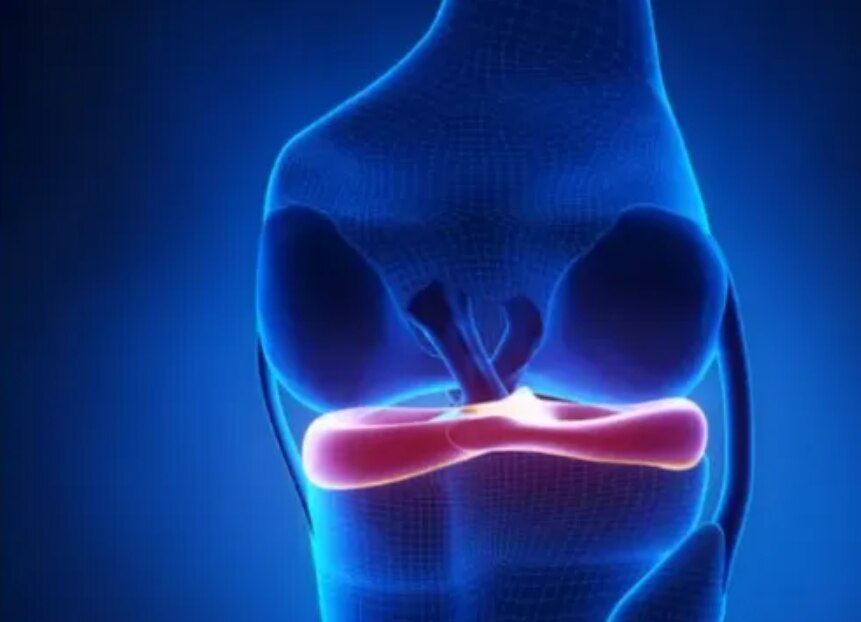
Meniscus Treatment The meniscus is a C-shaped piece of tough, rubbery cartilage that acts as a shock absorber between your shinbone and thighbone. View service → |
Knee Arthroscopy Treatment Knee arthroscopy is a surgical procedure in which the concerned doctor examines and treats the damaged knee. View service → |
How do rehabilitation and follow-up shape recovery?
Recovery is measured by function, not only by the surgery date or disappearance of pain. Follow-up checks your wound after surgery, swelling, range of motion, walking pattern, quadriceps activation, locking and instability. That is what to expect during meniscus treatment as the meniscus treatment process moves from diagnosis to staged rehabilitation and reassessment.
| Option | Rehabilitation focus | Progress and return |
|---|---|---|
| Meniscus repair | Protect the repaired tear with crutches, restricted loading, a brace and controlled knee bending | Advance only under the surgeon’s protocol; sport requires full motion, strength, balance and sport-specific drills, often after several months |
| Partial meniscectomy | Restore motion and address swelling, quadriceps weakness and altered movement habits | Walking returns sooner, but running, jumping and pivoting wait until function returns |
| Non-surgical care | Reduce symptoms while rebuilding motion, quadriceps and hip strength | Progress exercises before resuming impact or cutting activities |
Contact the treating team promptly for fever, increasing redness or drainage, calf swelling, severe pain, new numbness or a newly locked knee. A locked knee is not ordinary clicking and can indicate a displaced tear. Before leaving each visit, ask:
- Which activities are allowed now, and how much swelling is acceptable?
- When should you progress exercises?
- Which pain medicines are safe for you?
- When is the next review?
Frequently asked questions
What happens at the first meniscus assessment?
The clinician reviews how the injury began, your pain and swelling, and symptoms such as catching, clicking, giving way or true locking. They examine knee movement, tenderness, stability and signs of a meniscus injury.
How do doctors confirm a meniscus tear?
Doctors combine your symptom history and physical examination with imaging. X-rays help assess bone and arthritis, while an MRI can show the meniscus, cartilage, ligaments and other soft tissues.
How is the treatment choice made?
The choice depends on the tear’s location and pattern, symptom severity, knee stability, activity demands, age and associated cartilage or ligament damage. Options can include rehabilitation, activity changes, medication, injections or arthroscopic surgery.
What happens if surgery is recommended?
The surgeon explains the planned arthroscopic procedure, including whether the tear can be repaired or damaged tissue needs trimming. You receive instructions about preparation, anaesthesia, weight-bearing, exercises and expected follow-up.
How do rehabilitation and follow-up shape recovery?
Rehabilitation restores knee movement, strength, balance and function in stages. Follow-up checks healing, swelling, pain, movement and progress before you return to sport, work or demanding activities.
Keywords