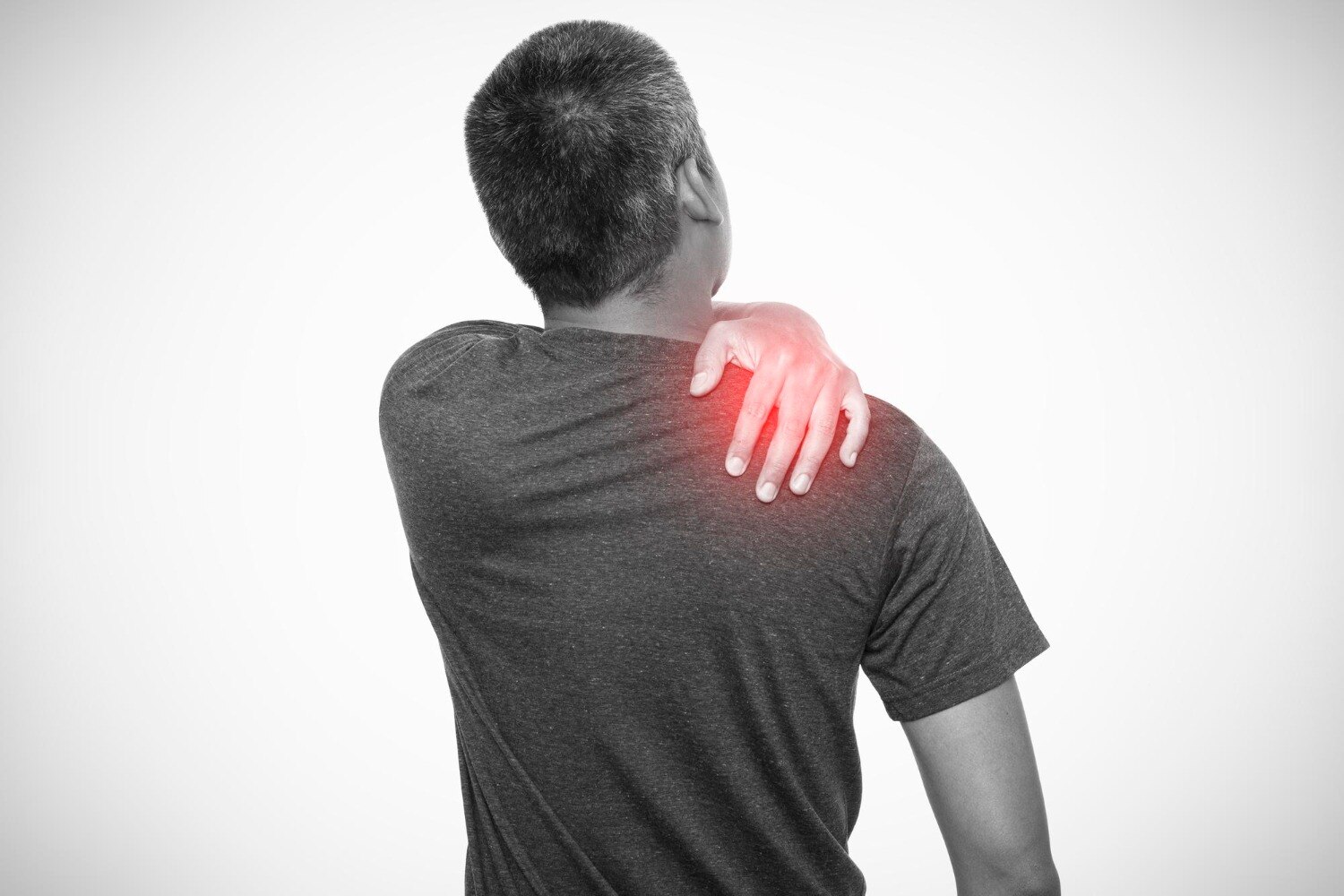
A slip on a wet trek, a forceful swimming stroke, or lifting soaked clothing can strain or tear structures in the shoulder, but rain itself does not prove that the joint is damaged. You will learn how to respond immediately, recognise emergency symptoms, judge when a consultation is needed, and understand when arthroscopy is a reasonable treatment discussion.
Key takeaways
- Seek urgent care for deformity, numbness, a cold hand, or an obvious dislocation.
- Rest the shoulder, apply ice for 15–20 minutes, and avoid painful lifting.
- Imaging and movement tests distinguish strains, tears, dislocations, and referred pain.
- Discuss arthroscopy when pain, weakness, or instability persists despite appropriate treatment.
What happened during the activity, and are there emergency warning signs?
Connect shoulder pain after monsoon activity to the movement that caused it, not to the rain itself. A sudden force can injure different structures:
- A slip while trekking or bracing during a fall can cause a fracture, dislocation, or labral injury.
- Repeated overhead cleaning, swimming, or lifting wet clothing can overload tendons and irritate the bursa.
- A sharp pull while stopping a fall can produce a rotator-cuff tear.
Pain that starts during one event, followed by bruising, swelling, clicking, catching, instability, sudden weakness, or difficulty raising the arm is not ordinary post-activity soreness.
Seek same-day emergency care after trauma if:
- The shoulder looks out of place or has severe deformity.
- You cannot move the arm because of intense pain or weakness.
- The hand becomes numb, unusually cold, pale, blue, or difficult to feel a pulse in.
- An open wound is present near the shoulder.
- The arm hangs abnormally after a fall or traction injury.
Do not try to force a suspected dislocation back into position. Keep the arm supported and arrange urgent medical assessment, because reduction and a nerve-and-blood-supply examination require medical care.
If you search for shoulder injury treatment Vile Parle after an injury, use the service to obtain an examination; the search phrase itself does not establish that arthroscopy is needed.
How should you manage a minor strain during the first few days?
For a mild strain without deformity, numbness, or major weakness, protect the shoulder for 48 to 72 hours without keeping it completely still. Stop overhead work, swimming, badminton, heavy lifting, and movements that reproduce sharp pain.
- Apply a cold pack wrapped in a towel for 15 to 20 minutes, up to five times daily. Do not place ice directly on the skin.
- Support the arm briefly with a pillow when resting, but avoid wearing a sling continuously unless a clinician advises it.
- Move the elbow, wrist, and fingers normally. Try small, gentle shoulder movements within a comfortable range; forcing a stretch can worsen an irritated tendon.
- Use paracetamol according to the package directions if you can take it safely. Ask a pharmacist or clinician before using ibuprofen if you have kidney disease, stomach ulcers, blood-thinning treatment, or pregnancy.
Arrange an assessment if pain is not clearly improving after three to five days, remains significant after one to two weeks, or repeatedly interrupts sleep. Do not wait if pain prevents dressing, bathing, driving, lifting the arm, or returning to ordinary tasks.
A shoulder pain specialist near Santacruz can examine strength and movement before deciding whether imaging is needed. Seek same-day care for increasing swelling, marked weakness, a catching or unstable sensation, or a hand that becomes numb, cold, pale, or blue. Pain after a fall also deserves earlier review than ordinary post-activity soreness.
How will a clinician determine whether the problem is a sprain, tear, dislocation, or referred pain?
The clinician matches the injury mechanism with your examination findings. A slip with the arm stretched out raises concern for fracture, dislocation, or labral injury; repeated overhead cleaning, swimming, or lifting wet clothes points more toward tendon irritation or bursitis.
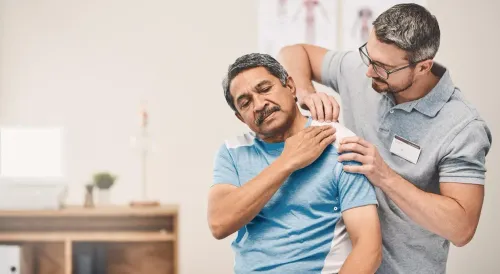
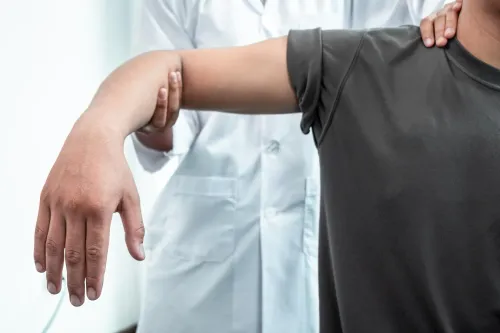
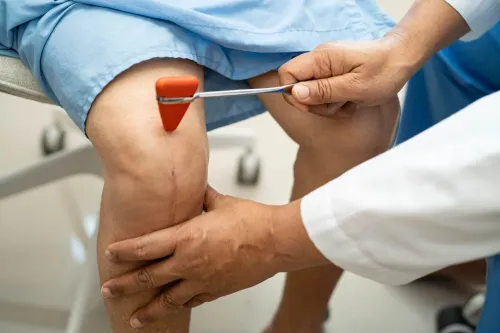
During the visit, expect questions about when the pain began, where it travels, weakness, clicking, catching, and instability. The examination usually includes:
- Looking for deformity, bruising, swelling, and muscle wasting.
- Checking active movement, then passive movement, to distinguish pain-limited motion from a stiff joint.
- Testing rotator-cuff strength and shoulder stability.
- Examining the neck and nerves when pain travels below the elbow, or when numbness and tingling suggest referred pain.
- Checking hand sensation, colour, temperature, and pulses after significant trauma.
An X-ray is usually the first scan after a fall, traction injury, or visible deformity. It can show a fracture, dislocation, or arthritis, but it does not reliably show rotator-cuff or labral tears. Do not try to force a dislocated shoulder back into place; reduction and nerve and blood-flow checks require medical care.
Ultrasound can assess the rotator cuff dynamically and is useful for suspected tendon tears. MRI gives a broader view of the rotator cuff, labrum, cartilage, and other soft tissues when X-rays are normal but weakness, instability, or persistent loss of function continues.
A tear on MRI matters only when it matches your symptoms, examination, and injury history.
When does shoulder pain justify a discussion about arthroscopy?
A traumatic full-thickness rotator-cuff tear with marked weakness or inability to raise the arm makes arthroscopy worth discussing; pain alone does not. The diagnosis must match the injury, examination, MRI images, and the function you have lost.
| Finding | Likely next step | Why it matters |
|---|---|---|
| Acute repairable tear, recurrent dislocation, or fracture-related problem | Early surgical opinion | Delay can compromise repair or stability |
| Persistent pain and disability after suitable care | Discuss options | Surgery is considered when non-operative treatment fails |
| MRI tear without weakness or matching symptoms | Seek another assessment | Age-related tears can be painless |
| Progressive loss of active and passive movement, especially external rotation | Treat stiffness first | This pattern suggests frozen shoulder, not automatically a tendon tear |
For many non-urgent problems, start with activity modification, medically safe analgesia or anti-inflammatory treatment, and structured physiotherapy. A stiff shoulder needs movement restoration rather than an operation by default. Ask what surgery is expected to improve: pain, strength, stability, or range of motion.
During arthroscopy, a camera enters through small portals; the surgeon may remove inflamed tissue, stabilise a labral injury, or repair a tendon with anchors. Rehabilitation can involve a sling, protected movement, then gradual strengthening over several weeks or months.
Risks include infection, bleeding, nerve injury, stiffness, persistent pain, anaesthetic complications, and a failed or recurrent repair. When comparing shoulder arthroscopy treatment in mumbai, review the actual scans, alternatives, rehabilitation demands, and complication or re-operation rates—not just the search result.
How should you choose a shoulder surgeon and evaluate a proposed operation?
A local search for “shoulder arthroscopy surgeon Mumbai” gives you names, not proof that arthroscopy is appropriate. Check the surgeon’s orthopaedic qualification, shoulder-specific experience, review of your actual X-rays or MRI images, and explanation of the pain generator. The proposed operation should state what it aims to improve: pain, strength, stability, or range of motion.
Ask these questions before agreeing:
- What diagnosis explains both my symptoms and examination findings?
- What non-operative care should I try, and for how long?
- Which structure will you repair, remove, or stabilise?
- What rehabilitation schedule, restrictions, and time away from work should I expect?
- What are your complication and re-operation rates for this procedure?
Whether you consult Dr Dhirav Shah- Orthopaedic Surgeon 8104619499 or another clinician, ask for answers specific to your shoulder rather than accepting a scan report alone.
| Situation | Why it deserves scrutiny | Is a second opinion sensible? |
|---|---|---|
| MRI shows a tear but examination is mild or unclear | The scan may show an incidental age-related change rather than the pain source | Yes |
| Diagnosis does not match weakness, movement loss, or instability | Surgery aimed at the wrong structure may not solve the problem | Yes |
| Non-urgent pain has had no appropriate physiotherapy, activity modification, or medication trial | You have not tested reasonable alternatives | Yes |
| Fracture, dislocation, infection, or rapidly worsening loss of function is suspected | Delay can damage the joint or nearby tissues | Seek urgent assessment, not a routine second opinion |
Related services
Shoulder Arthroscopy Treatment Shoulder Arthroscopy Treatment Surgeons perform Shoulder Arthroscopy to diagnose and treat shoulder pain that nonsurgical treatments have not improved. View service → |
Rotator Cuff Tear Treatment The rotator cuff is a collective muscle and tendon which supports the shoulder joint and enables movement. View service → |
Frequently asked questions
When should shoulder pain after a monsoon activity receive urgent medical attention?
Seek urgent care after a visible deformity, suspected dislocation, inability to move the arm, new numbness or weakness, severe swelling, or a hand that feels cold or looks pale or blue.
How should you treat a minor shoulder strain during the first few days?
Stop the movement that caused pain, keep the shoulder gently mobile within a comfortable range, and apply a wrapped ice pack for 15–20 minutes at a time. Avoid heavy lifting and painful exercises.
How does a clinician identify the cause of shoulder pain?
The clinician reviews the injury mechanism, checks strength and range of motion, examines the neck and nerves, and orders X-rays, ultrasound, or MRI when the findings require more detail.
When should you discuss shoulder arthroscopy?
Discuss arthroscopy when a confirmed tear, instability problem, or damaged tissue causes persistent pain, weakness, or repeated symptoms after suitable non-surgical treatment.
How can you evaluate a proposed shoulder operation?
Ask which structure is injured, what imaging shows, why arthroscopy is recommended, which alternatives remain, expected rehabilitation time, risks, and how often the surgeon performs the procedure.
Related service
Labral Repair Treatment Labral tears occur in the labrum -the cup-shaped fibrocartilage attached to the ball and socket joint of the shoulder. View service → |
Keywords