A knee that pops, swells quickly or repeatedly gives way needs more than an online cost estimate. You will learn how ACL injuries are assessed, when physiotherapy is reasonable, when reconstruction enters the discussion, and which items to check before comparing treatment costs in Mumbai.
Key takeaways
- Seek consultation after knee twisting, sudden swelling, instability or a popping sound.
- MRI shows the ACL tear and helps identify meniscus or cartilage damage.
- Physiotherapy may suit stable knees; instability and sports goals can favour reconstruction.
- Compare consultation, scan, surgery, implant, hospital and rehabilitation costs separately.
How an ACL injury happens and when to seek a consultation
A football tackle is not required to tear the ACL. The injury often happens when you twist your knee while playing football, cricket, badminton or another sport, stop suddenly while running, land awkwardly after a jump, or take a direct impact to the knee. The ligament can tear even when the contact seems minor.
Arrange an ACL consultation Mumbai promptly if you notice:
- A popping sensation at the moment of injury
- Rapid knee swelling within a few hours
- Difficulty bearing weight
- Loss of full knee extension
- A feeling that the knee is giving way or buckling
These symptoms need medical review because an ACL injury can occur alongside a meniscus tear, cartilage injury or collateral-ligament damage. Until assessed, avoid pivoting, running and testing the knee repeatedly; use support and ice if advised.
Do not wait for a routine appointment if the knee is locked, severely deformed, numb, cold, rapidly and extensively swollen, or affected by an open wound. Calf swelling, chest pain or breathlessness require urgent medical assessment because they are not symptoms to manage through a standard acl injury treatment near me search.
Go to an emergency facility instead of waiting for an orthopaedic slot.
What happens during an ACL consultation and which scans are useful
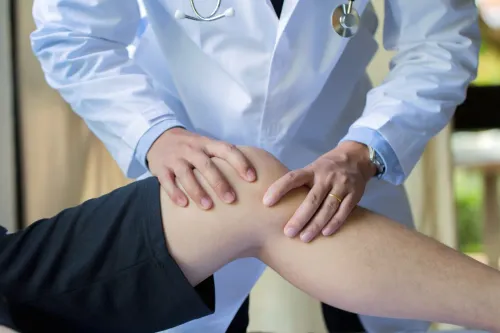
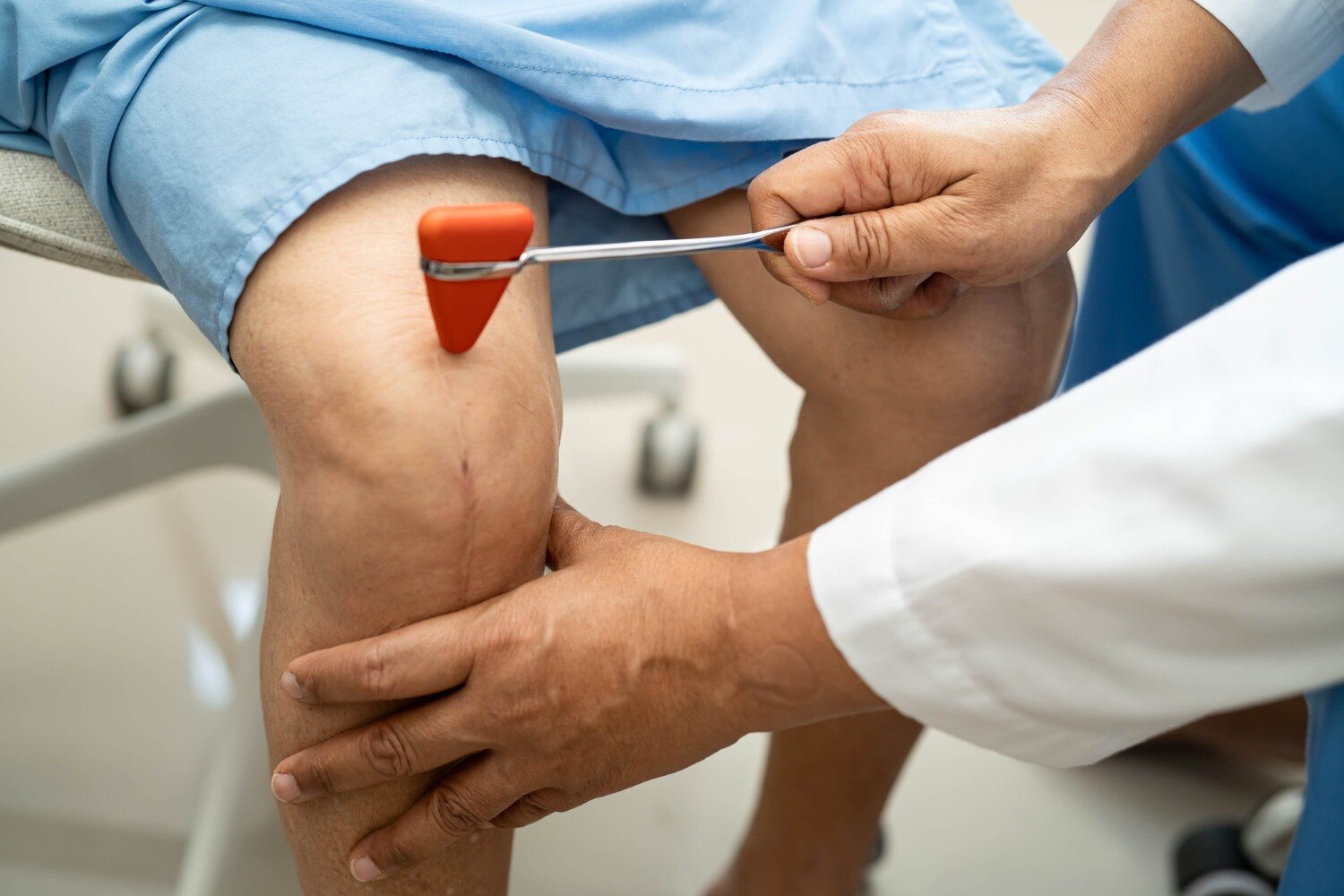
Before recommending treatment, the clinician establishes how the knee was injured and whether it is functionally unstable. An ACL consultation in Mumbai begins with your account of the movement, timing of swelling, previous knee problems, giving-way episodes, and work or sporting demands.
The examination includes:
- Range of motion, especially loss of full extension
- Lachman, pivot-shift and anterior drawer tests
- Tenderness and quadriceps activation
- Meniscus and collateral-ligament signs
- A locked knee or other mechanical block
| Assessment | What it shows | When it is useful |
|---|---|---|
| X-ray | Fracture, bone avulsion or another bony problem; it does not show the ACL | After trauma or when a fracture must be excluded |
| MRI | ACL injury, meniscal tears, cartilage damage, bone bruising and associated ligament injuries | To define the injuries after clinical assessment |
An MRI report should distinguish a partial tear from a complete tear, an ACL-deficient knee from an old or chronic tear, and an imaging finding from functional instability. Meniscal damage can change the operation and recovery plan, so ask whether repair is needed.
A scan alone does not decide whether you need surgery. The clinician combines your symptoms, examination findings, activity goals and scan results when discussing treatment with an ACL surgeon in Vile Parle.
When physiotherapy is reasonable and when reconstruction is considered
Treatment follows how your knee functions, not the MRI report alone. Physiotherapy is reasonable for a partial tear, a stable knee, low sporting demands or no repeated giving-way episodes. An ACL tear on MRI does not automatically make reconstruction the right first choice when daily activity remains comfortable and low-demand.
| Option | What it includes | When it is considered |
|---|---|---|
| Structured rehabilitation | Physiotherapy, quadriceps and hamstring strengthening, neuromuscular and balance training, activity modification, and gradual return to work or sport | Partial tear, stable knee, low-demand activity, or no recurrent instability |
| ACL reconstruction | Surgical stabilisation followed by a planned rehabilitation programme | Complete tear in a young or active person, repeated giving-way, a goal of returning to pivoting sports, associated meniscus or ligament injury, or instability despite rehabilitation |
Age, growth status, medical conditions and your rehabilitation goals also affect the decision. Repeated giving-way can damage the meniscus or cartilage, so follow-up matters if surgery is deferred.
Ask an ACL surgeon in Vile Parle to assess stability on examination as well as the scan, and discuss whether ACL treatment in Vile Parle fits your work, sport and recovery goals.
What ACL reconstruction includes and why recovery affects the decision
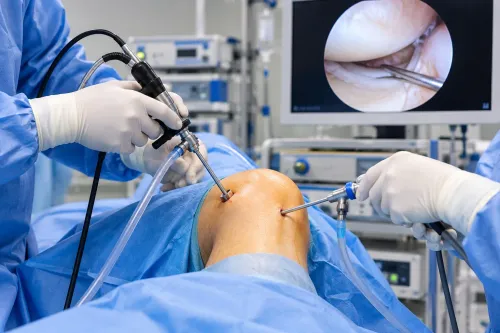
ACL reconstruction is usually an arthroscopic operation that replaces the torn ligament with a graft, but surgery is only one stage of treatment. Before surgery, marked swelling, poor quadriceps activation or loss of full extension should be addressed because operating on a stiff knee increases the risk of lasting motion loss.
1. Choose the graft with its trade-offs in mind. A bone-patellar-tendon-bone autograft offers strong bone-to-bone fixation but can cause pain when kneeling or at the front of the knee. A hamstring autograft may reduce kneeling pain but can leave hamstring weakness. A quadriceps-tendon autograft provides substantial tissue, with possible front-of-thigh weakness.
Allografts have a higher reported failure risk in young or active patients.
2. Confirm what else will be treated. A meniscus repair can require stricter weight-bearing and range-of-motion limits than an isolated ACL reconstruction. Ask whether meniscus or cartilage procedures, fixation devices and their rehabilitation restrictions are included.
3. Treat rehabilitation as part of the operation. Early targets are swelling control, full knee extension and quadriceps activation; strengthening comes before balance work, hopping and sport-specific movement. For an acute isolated tear requiring reconstruction, AAOS guidance supports surgery within five months, but swelling, motion, associated injuries and personal circumstances affect timing.
Do not accept a guaranteed six-month return to sport. Full motion, minimal swelling, strength and hop-test symmetry, and psychological readiness matter more than a calendar; pivoting-sport athletes often need nine to twelve months or longer. This recovery commitment is central when weighing ACL treatment in Vile Parle.
How to compare ACL treatment cost and choose a Vile Parle consultation
Budget ₹1.5–3.5 lakh as a preliminary Mumbai figure for arthroscopic ACL reconstruction and ₹800–2,500 for an orthopaedic consultation. There is no single regulated ACL treatment cost in Vile Parle; these are indicative, unsourced ranges, not quotations. Hospital, surgeon, graft, fixation devices, room category and rehabilitation can change the total.
| Estimate type | What it includes | Risk when comparing |
|---|---|---|
| Package price | A bundled hospital and surgery charge | MRI, implants, rehabilitation, meniscus repair or an extra night may be excluded |
| Itemised estimate | Separate charges for each stage of care | The total is easier to check before you commit |
Ask for written prices covering:
- Surgeon, anaesthetist and operating-room charges
- Implants or fixation devices and graft-processing charges
- MRI, laboratory tests, hospital stay and medicines
- Physiotherapy, follow-up visits and emergency review
- Meniscus repair, cartilage procedures and any additional night
When comparing ACL treatment in Vile Parle, ask an ACL surgeon in Vile Parle how frequently they perform ACL reconstruction, which graft options they offer, who provides rehabilitation and how associated meniscal injuries are managed. A repaired meniscus can require stricter weight-bearing or range-of-motion limits than isolated reconstruction, so confirm what the quote covers.
Dr Dhirav Shah- Orthopaedic Surgeon 8104619499 can be included in your ACL consultation Mumbai comparison, but proximity should not outweigh surgical experience, a clear estimate and a defined rehabilitation plan.
Related services
ACL Treatment Anterior cruciate ligament (ACL) is the main ligament responsible for stabilization of the knee movement. View service → |
Knee Arthroscopy Treatment Knee arthroscopy is a surgical procedure in which the concerned doctor examines and treats the damaged knee. View service → |
Frequently asked questions
When should you seek an ACL consultation?
Arrange an ACL consultation after a knee twist, awkward landing, sudden stop or impact causes swelling, a popping sound, pain, restricted movement or repeated giving way.
Which scans are useful for an ACL injury?
An X-ray helps assess bone injury and alignment, while an MRI shows the ACL, menisci, cartilage and other soft tissues.
When is physiotherapy reasonable for an ACL tear?
Physiotherapy is reasonable when the knee is stable, symptoms are controlled and your work or activities do not demand frequent pivoting or jumping.
When is ACL reconstruction considered?
Reconstruction is considered when the knee repeatedly gives way, associated injuries need treatment, or you want to return to pivoting sports after clinical assessment.
What does ACL reconstruction recovery involve?
Recovery includes surgical healing, progressive physiotherapy, strength and movement work, balance training and a staged return to activity; the timeline depends on the procedure and rehabilitation progress.
Keywords