You may want to know exactly what will happen after you enter the hospital, what the surgeon can discover inside your knee, and why recovery differs between procedures. By the end, you will understand the knee scope surgery steps, the questions to ask at consultation, and what to arrange before returning home.
Key takeaways
- Confirm the operative knee, procedure and possible treatment changes before signing consent.
- Arrange transport, home support, medicines and crutches before admission.
- Ask what the arthroscope found and whether the surgeon repaired or removed tissue.
- Follow dressing, weight-bearing and exercise instructions after the knee scope procedure.
From hospital admission to closing the knee portals
The knee arthroscopy process begins after hospital admission, identity checks, confirmation of the operative knee and written consent. The consent discussion covers the planned procedure, possible findings and a change from inspection to treatment if the joint looks different from the scan.
1. These knee scope surgery steps start with anaesthesia chosen by the anaesthetist, followed by positioning, skin cleaning and sterile draping. The knee may be supported in a holder, with a tourniquet used when appropriate.
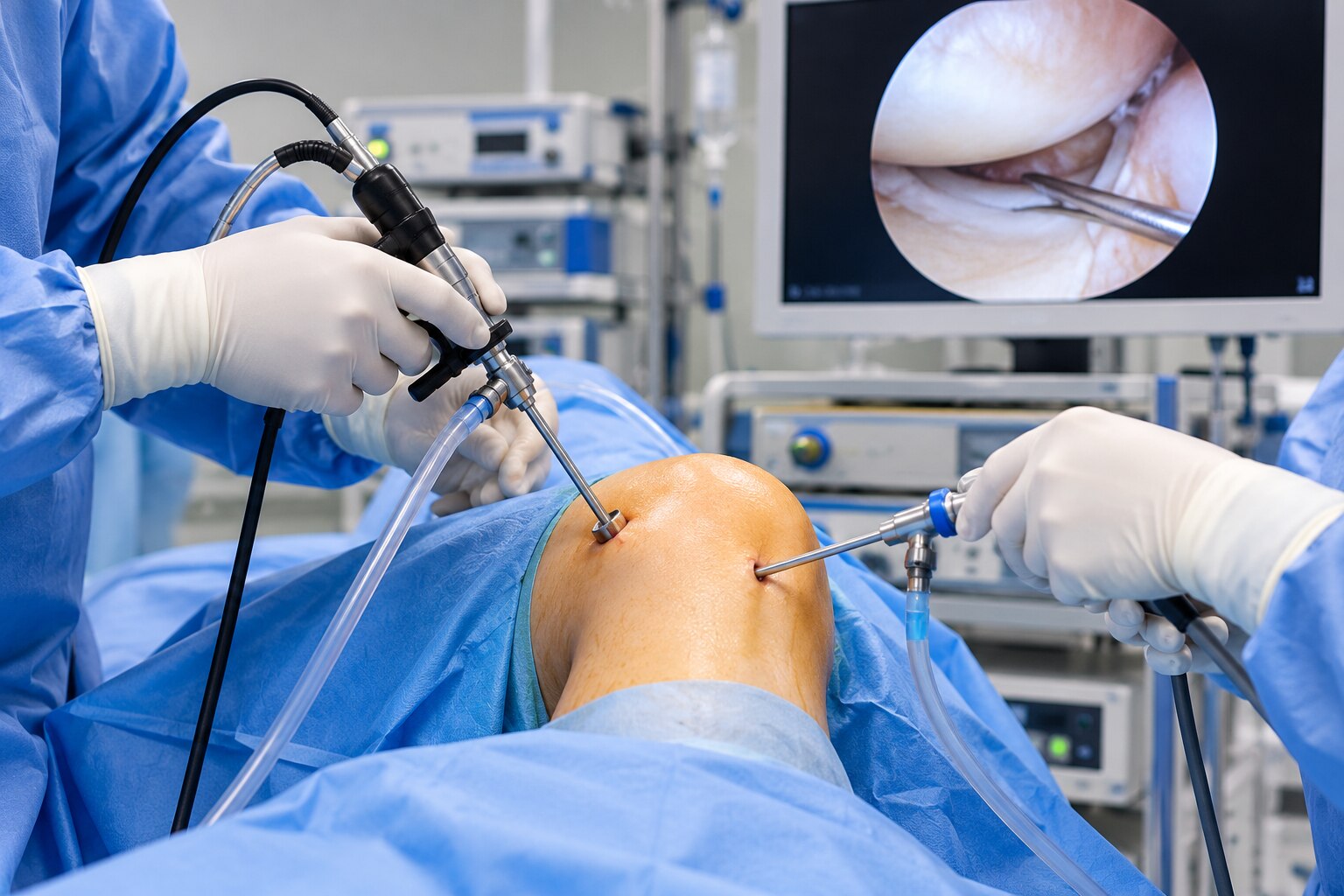
2. The surgeon makes small portal incisions around the knee. Through one portal, the arthroscope enters; sterile fluid flows through the joint to create space and keep the camera view clear.
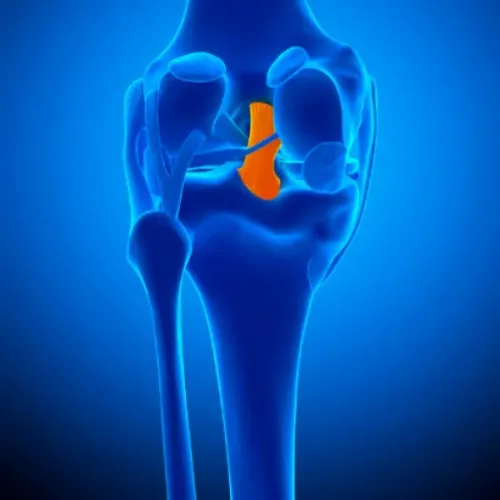
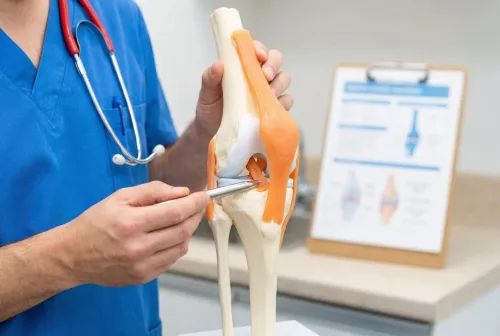
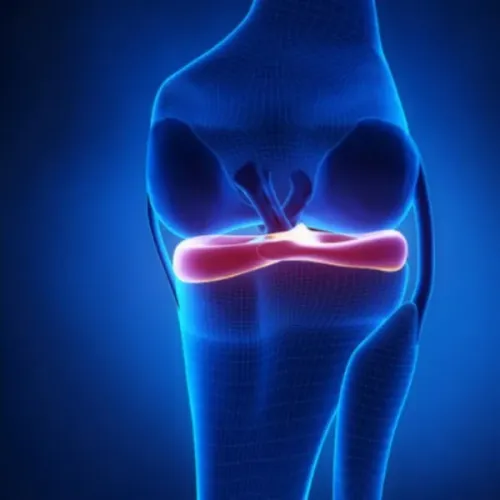
3. The camera inspects the patella, trochlea, medial and lateral compartments, menisci, articular cartilage, synovium, ACL and PCL. This direct view can reveal tissue quality that an MRI cannot predict precisely.
4. The surgeon treats the confirmed problem through another portal. Treatment can include trimming unstable meniscal tissue, repairing a meniscus, treating damaged cartilage or performing a ligament-related procedure.
5. The joint is irrigated, instruments are removed and the portals are closed with sutures, adhesive strips or a small dressing. The knee then receives a padded dressing before transfer to recovery.
What happens during knee arthroscopy in Mumbai follows this same core sequence. The operation itself may be day-case surgery, but the closure does not mark full recovery: weight-bearing, crutches and rehabilitation depend on what was found and repaired.
What to arrange before surgery and what anaesthesia feels like
A knee arthroscopy consultation should establish whether surgery is appropriate, not simply confirm an MRI finding. The surgeon examines movement, stability, swelling and locking, then reviews X-rays or MRI scans, your medical history, allergies and medicines.
A genuinely locked knee, loose body, acute repairable tear or ligament injury differs from pain caused by degenerative osteoarthritis, for which arthroscopy is usually a poor option.
Before booking, ask for a written estimate covering the entire pathway:
- Surgeon, anaesthetist, operating-room and day-care charges.
- Implants or graft-fixation devices if a repair or reconstruction is possible.
- Physiotherapy, follow-up visits and charges if inspection changes the planned treatment.
- Fasting instructions, medicine changes, arrival time and written postoperative restrictions.
Tell the team about diabetes, sleep apnoea, heart or lung disease, previous anaesthetic problems, and every prescription, supplement and blood thinner. The anaesthetist may request blood tests or other assessments and will choose general, spinal or regional anaesthesia, or local anaesthesia with sedation.
On arrival at the Mumbai hospital, staff verify your identity, consent, scans and operative knee. You change into a gown, receive an intravenous line, and the team confirms when you last ate or drank. General anaesthesia feels like drifting to sleep; spinal or regional anaesthesia numbs the leg while sedation can make you drowsy.
Local anaesthesia with sedation may let you hear voices, but you should not feel sharp surgical pain. Expect soreness, swelling or numbness as sensation returns, so arrange an adult to take you home.
What the arthroscope shows and how findings change treatment
The knee arthroscopy process shows the surgeon what scans cannot: the condition of tissue inside the joint. A camera passes through a small portal while sterile fluid opens the space for inspection. The surgeon checks the patella, trochlea, synovium, medial and lateral compartments, menisci, articular cartilage, ACL and PCL.
Tissue quality seen directly can change the plan.
The practical knee scope surgery steps after inspection depend on what the camera reveals:
- A stable meniscus tear may need no treatment, while loose or frayed tissue may be trimmed.
- A repairable meniscus tear may require sutures or an implant, followed by protected weight-bearing.
- Damaged cartilage may be smoothed or treated with a cartilage procedure.
- A torn ACL or PCL may lead to discussion of reconstruction rather than simple arthroscopy.
Diagnostic and operative arthroscopy are different endpoints:
| Type | What happens inside the knee | Effect on the plan |
|---|---|---|
| Diagnostic arthroscopy | The surgeon inspects the joint, records findings, irrigates it and closes the portals. | No repair or tissue removal is performed; recovery is usually less restricted. |
| Operative arthroscopy | The surgeon introduces shavers, punches, sutures or other instruments through additional portals to treat the finding. | Recovery follows the treatment: trimming differs from meniscus repair, cartilage work or ligament reconstruction. |
The surgeon may begin with consent for a possible treatment, but the exact repair cannot always be predicted from an MRI. Swelling control, full knee extension, quadriceps activation and prescribed motion exercises start early, with restrictions matched to the procedure.
Dressings, crutches and recovery after the operation
After the portals are closed, the surgeon covers the small incisions with sterile dressings and transfers you to recovery while the anaesthesia wears off. Nurses check pain, nausea, circulation and safe movement. Most uncomplicated procedures are day-case operations, but discharge means supervised home recovery, not a healed knee.
Crutches protect the joint while swelling, weakness or a repair limits walking. Your written instructions should state weight-bearing, dressing care, showering, pain relief, driving, work, physiotherapy and follow-up. Early rehabilitation targets swelling control, full knee extension, quadriceps activation, and gradual movement and strengthening. Keep dressings dry as instructed.
Increasing redness, pus, fever, calf swelling or breathlessness needs prompt medical advice.
| Procedure | Early walking and activity | Why restrictions differ |
|---|---|---|
| Diagnostic arthroscopy | Weight-bearing often progresses quickly; crutches are used while comfort and control are poor. | Nothing substantial was repaired, so recovery mainly follows the portal wounds and anaesthesia. |
| Meniscus trimming | Walking and range of motion usually advance sooner than after repair. | Removing unstable tissue does not require protection of healing stitches. |
| Meniscus repair | Limited weight-bearing or a brace may be prescribed, with controlled bending. | Sutured meniscal tissue needs time to heal without excessive load or flexion. |
| Ligament reconstruction | Crutches, bracing and staged exercises continue longer; pivoting sport remains restricted. | A graft must integrate after tunnels are drilled and fixation is placed. |
The knee arthroscopy process ends in the operating room but not in the portals. The final repair found inside the knee determines your restrictions and physiotherapy milestones.
Questions to settle before choosing knee arthroscopy in Mumbai
Arthroscopy is appropriate only when your symptoms, examination and scans point to a problem surgery can improve. A knee arthroscopy consultation should distinguish degenerative pain from a genuinely locked knee, loose body, acute repairable tear or ligament injury; pain from osteoarthritis alone is a poor reason to proceed.
Ask what non-operative treatment remains and why arthroscopy offers more benefit than physiotherapy, medication or observation.
Compare the full pathway, not just the surgeon’s fee. Request a written estimate covering:
- Anaesthesia, operating-room and day-care charges
- Implants or graft-fixation devices if the plan changes to repair or reconstruction
- Physiotherapy, follow-up visits and emergency postoperative cover
- Weight-bearing, driving, work and sport restrictions
- What happens during knee arthroscopy in Mumbai if camera findings require a different treatment
| Planned pathway | Main trade-off | Ask before booking |
|---|---|---|
| Inspection or trimming | Faster rehabilitation, but removed tissue cannot be restored | What finding justifies trimming? |
| Meniscus repair | Longer protected weight-bearing and rehabilitation, with tissue preserved | Could this tear be repaired instead? |
| Ligament reconstruction | Graft, fixation devices and months of rehabilitation | What graft and rehabilitation schedule are planned? |
If you search for a knee arthroscopy surgeon in Vile Parle, verify current registration and qualifications on the National Medical Commission register. Ask for the diagnosis, complication rates and who handles urgent problems after discharge. Whether you consult Dr Dhirav Shah- Orthopaedic Surgeon 8104619499 or another specialist, get postoperative instructions and the estimate in writing.
Related service
Knee Arthroscopy Treatment Knee arthroscopy is a surgical procedure in which the concerned doctor examines and treats the damaged knee. View service → |
Frequently asked questions
What happens when you arrive for knee arthroscopy in Mumbai?
The hospital checks your identity, confirms the operative knee, reviews consent and prepares you for anaesthesia and surgery.
What should you arrange before knee arthroscopy?
Arrange transport home, an adult to help after discharge, prescribed medicines, suitable clothing and crutches if your surgeon recommends them.
What does the arthroscope show, and can the treatment change?
The camera shows the cartilage, menisci, ligaments and joint lining. If findings differ from the scan, the surgeon may move from inspection to an agreed treatment covered by consent.
What happens after the knee arthroscopy operation?
The surgeon closes the small portals and applies dressings. Your team explains pain relief, crutch use, weight-bearing, wound care and follow-up exercises before discharge.
Keywords