Hip pain does not automatically mean you need an operation, but persistent pain that limits sleep, walking, stairs or basic tasks deserves a structured assessment. You will learn which symptoms require emergency care, what a Mumbai consultation should include, how surgeons compare treatment options, and how to choose a nearby specialist without relying on distance alone.
Key takeaways
- Seek urgent care for sudden severe pain, deformity, fever, or inability to bear weight.
- Total hip replacement treats advanced joint damage after diagnosis and non-surgical options fail.
- Bring medication details, previous scans, and questions about recovery to your consultation.
- Compare surgical experience, hospital facilities, follow-up care, and the complete treatment estimate.
When hip pain needs an urgent assessment
Persistent hip pain needs prompt surgical assessment when it continues despite appropriate physiotherapy, medicines or walking aids, especially when it wakes you at night or hurts at rest.
Arrange a hip replacement consultation Mumbai patients can access when walking distance is shrinking, you struggle to put on socks, enter a car, climb stairs or rise from a chair, or hip rotation has noticeably reduced. An X-ray finding alone does not decide the operation; worsening pain and lost function do.
- Seek emergency care after a fall if you cannot bear weight, or the leg looks shortened or rotated. These signs can indicate a hip fracture or dislocation.
- Go urgently for a hot, swollen hip with fever or chills, or sudden severe pain. Infection requires rapid treatment.
- After hip surgery, contact the surgical team urgently for increasing wound redness or drainage, fever, sudden worsening pain or new inability to walk.
- Seek immediate emergency care for calf swelling or pain with chest pain, breathlessness or coughing blood. These can signal a dangerous blood clot.
| Situation | What it may indicate | What to do |
|---|---|---|
| Prompt assessment | Night or rest pain, declining mobility, restricted rotation | Book an orthopaedic review soon |
| Emergency | Fall, inability to bear weight, shortened leg, fever with a hot joint | Attend an emergency department |
| Post-operative emergency | Sudden pain, dislocation symptoms, wound drainage or breathing symptoms | Contact the surgical team or emergency services immediately |
Which conditions lead to total hip replacement?
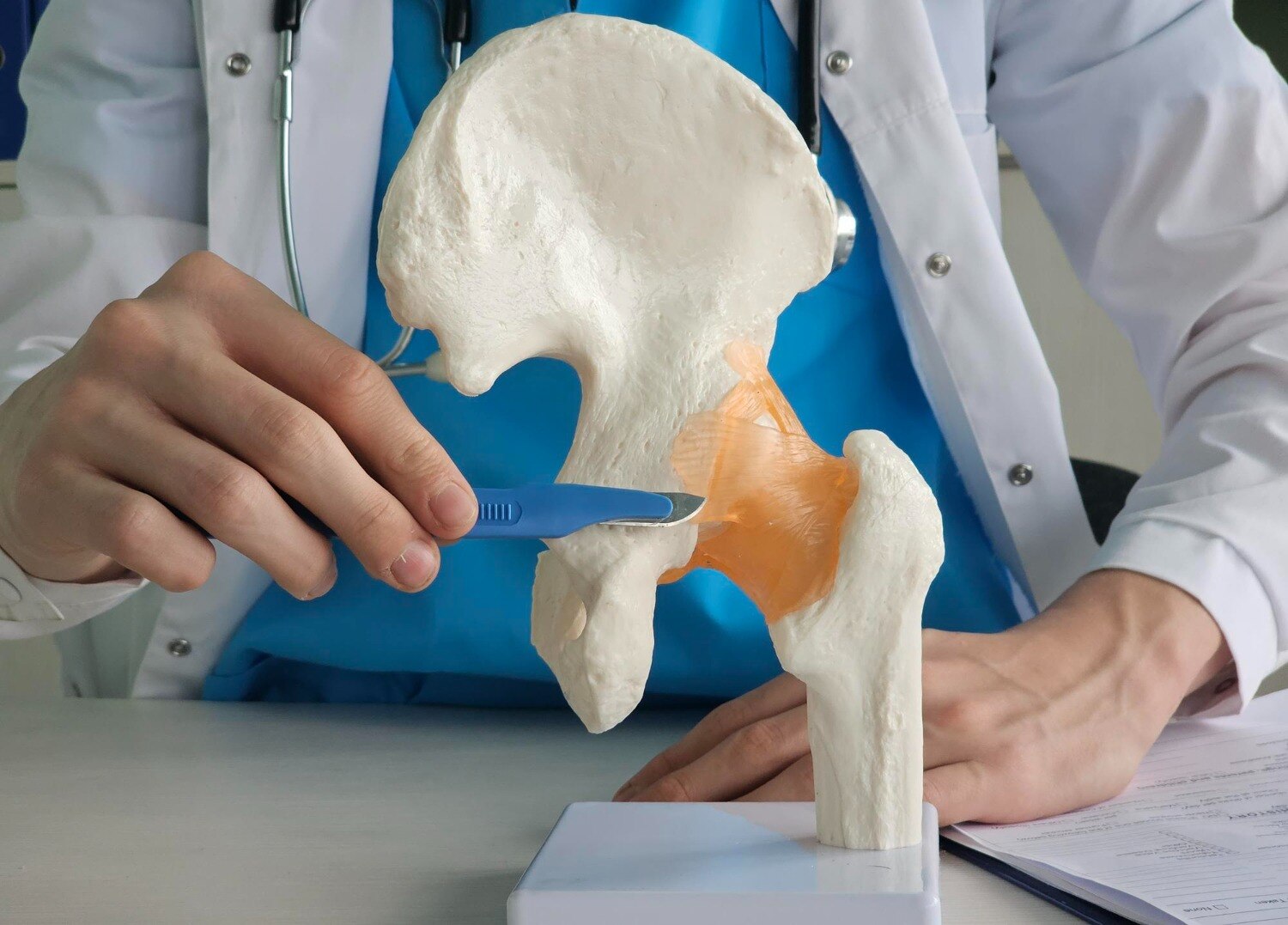
Advanced osteoarthritis, rheumatoid or other inflammatory arthritis, femoral-head osteonecrosis, certain hip fractures, and developmental hip disorders can damage the joint enough to require total hip replacement. The operation replaces both the femoral head and the acetabular socket; hemiarthroplasty replaces only the femoral head and is used more often for selected fractures.
| Option | What it means | When it applies |
|---|---|---|
| Injections | Temporary reduction of inflammation and pain | Pain remains manageable and joint damage has not made daily function unacceptable |
| Physiotherapy, medicines or walking aids | Strength, mobility and symptom control without replacing the joint | Symptoms improve with treatment and you can still walk, sleep and manage essential activities |
| Observation | Monitoring symptoms, examination findings and imaging | Pain and disability are limited, or the diagnosis is uncertain |
| Total hip replacement | Removal of damaged joint surfaces and insertion of an artificial joint | Persistent pain and loss of function continue despite appropriate non-operative care |
The decision does not rest on an X-ray alone. A surgeon weighs pain at rest or night, walking distance, difficulty with stairs, socks, car entry or rising from a chair, loss of hip rotation, examination findings, radiographs and your medical risks.
Replacement becomes more appropriate when symptoms substantially restrict life or sleep and injections, physiotherapy or medicines no longer provide useful control.
A search for total hip replacement mumbai should lead to a clinical assessment, not a booking based on location or an image report. A hip fracture, infection or rapidly worsening pain requires a different and faster treatment pathway.
What happens at a hip replacement consultation in Mumbai?
A hip replacement consultation in Mumbai starts with deciding whether joint replacement is necessary at all. The surgeon matches your symptoms, examination and imaging with your health, mobility goals and ability to complete rehabilitation.
1. Describe pain location, duration, night or rest pain, walking distance, stair difficulty, and tasks such as putting on socks or entering a car. Bring your medication and allergy list, previous operation details, and information about dental or other active infections.
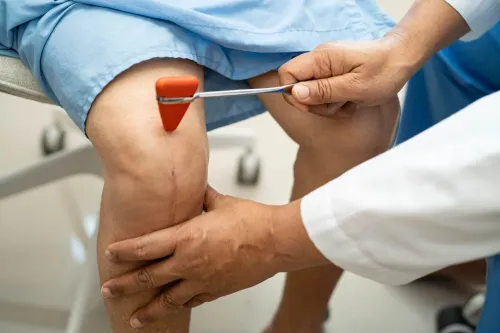
2. Expect an examination of your gait, hip movement, leg length, muscle strength and tenderness. The surgeon may also assess your back and knee because referred pain can lead to the wrong operation.
3. Ask whether you need standing or weight-bearing radiographs, usually an anteroposterior pelvis view and a lateral hip view. These show joint-space loss, bone damage, deformity and fracture; an MRI or CT is reserved for questions X-rays cannot answer.
4. Discuss diabetes, heart or lung disease, smoking, body weight, blood-thinner use and your home setup, including stairs and available help. These factors affect surgical risk and recovery planning.
5. Complete risk-based tests rather than an automatic battery. Blood counts, kidney function, glucose or HbA1c, an ECG, chest assessment, urine testing or medical clearance may be ordered before surgery.
A total hip replacement replaces the femoral head and acetabular socket. Hemiarthroplasty replaces only the femoral head, commonly for selected fractures; physiotherapy, injections, medicines or observation may suit other findings. Choose a hip replacement doctor Vile Parle patients can verify through the National Medical Commission register, postgraduate orthopaedic training and joint-replacement experience.
How to choose a surgeon near Vile Parle or Santacruz
A short journey helps with pre-operative tests, early reviews and rehabilitation, but it should not decide your choice. Compare the surgeon and hospital using the same questions, whether you searched for a hip replacement surgeon near Vile Parle or a hip replacement surgeon near Santacruz.
| Criterion | What to verify | Warning sign |
|---|---|---|
| Credentials | Indian Medical Register entry, postgraduate orthopaedic qualification and additional joint-replacement training | The profile lists only a clinic title or search ranking |
| Experience | Experience with primary and revision hip replacements, plus personal complication and revision rates | Vague claims such as “advanced surgery” without figures or context |
| Hospital | Infection-control systems, blood bank access, intensive-care support and 24-hour emergency cover | The surgeon cannot explain who manages an overnight problem |
| Implant plan | Cemented, uncemented or hybrid fixation, implant system, and why it suits your bone quality and anatomy | “Cementless” or “anterior” is presented as automatically better |
| Follow-up | Named after-hours contact, first review, wound checks, physiotherapy location and blood-thinner instructions | No written recovery or urgent-contact plan |
Ask who will perform each part of the operation and what happens if you develop fever, wound drainage, calf swelling or sudden breathlessness. The surgical approach should match the surgeon’s expertise and your anatomy, not advertising language.
If you meet Dr Dhirav Shah- Orthopaedic Surgeon 8104619499, use this checklist and request the same details in writing. Choose the team that answers clearly, not simply the clinic closest to home.
Related service
Total Hip Replacement Treatment Total Hip Replacement Treatment Painful hip mobility and difficulty sitting and walking can be signs of hip joint damage. People of all age groups. View service → |
What to understand before booking the operation
Before booking, confirm that total hip replacement will replace both the damaged femoral head and acetabular socket; hemiarthroplasty replaces only the head. Your surgeon should review standing hip X-rays, medicines, allergies, previous operations, infections, diabetes, heart and lung disease, smoking, weight, stairs and home rehabilitation needs.
Fixation choice is not a contest in which “cementless” always wins.
| Option | What it means | What influences the choice |
|---|---|---|
| Cemented | Bone cement anchors the components | Bone quality, age and fracture status |
| Uncemented | Components obtain fixation as bone grows onto them | Bone quality, anatomy and implant design |
| Hybrid | One component is cemented and the other is uncemented | Individual anatomy and surgeon’s plan |
Anterior, posterior and lateral approaches each have trade-offs. Choose the approach that matches your anatomy and the surgeon’s experience, then ask about dislocation precautions, wound problems, nerve injury and the surgeon’s own complication and revision rates.
Spinal or general anaesthesia will be discussed with the anaesthetist. Risks include infection, bleeding, clot, dislocation, fracture, leg-length difference, nerve injury, persistent pain and later revision. Clot prevention can combine an anticoagulant, compression devices and early walking; never stop aspirin or another blood thinner without instructions.
Before consenting, ask:
- Who performs the operation and provides after-hours care?
- What does the quoted package include?
- When are the first and later reviews?
- Where does physiotherapy occur, and when can you drive, work and climb stairs?
- Which symptoms require urgent contact?
Use these questions when comparing a “total hip replacement mumbai” search result.
Frequently asked questions
When does hip pain need an urgent assessment?
Arrange prompt assessment when pain persists despite physiotherapy, medicines, or walking aids, or when it causes night pain or pain at rest. Seek urgent care after a fall if you cannot bear weight, or if severe pain occurs with fever, swelling, deformity, or sudden loss of movement.
Which conditions can lead to total hip replacement?
Advanced osteoarthritis is the most common cause. Other indications include avascular necrosis, certain hip fractures, inflammatory arthritis, and severe joint damage from developmental conditions or previous injury.
What happens during a hip replacement consultation in Mumbai?
The surgeon reviews your symptoms, walking limitations, medical history, medicines, and previous treatment. They examine hip movement and leg function, review or order standing pelvis and hip X-rays, discuss non-surgical options, and explain whether total hip replacement is appropriate.
How do I choose a hip replacement surgeon near Vile Parle or Santacruz?
Check the surgeon’s orthopaedic training, experience with hip replacement, hospital privileges, anaesthesia and rehabilitation support, emergency arrangements, and follow-up process. Ask for a written estimate covering the surgeon, hospital, implant, tests, medicines, and rehabilitation.
What should I understand before booking a hip replacement operation?
Discuss the implant choice, surgical approach, expected hospital stay, walking plan, driving and work restrictions, possible complications, and follow-up schedule. Share conditions such as diabetes, heart disease, obesity, dental infection, or blood-thinning treatment before consenting.
Keywords