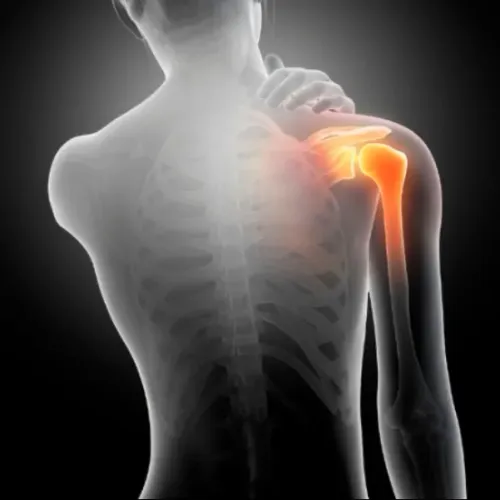

Painful stiffness needs more than a label: the clinician must confirm adhesive capsulitis, rule out conditions such as arthritis or a rotator cuff tear, and match treatment to your phase of recovery. You will be able to recognise what happens at the first assessment, how treatment choices are made, and what rehabilitation requires after an injection or procedure.
Key takeaways
- Compare active and passive movement during the first shoulder assessment.
- Use pain control to make stretching and movement exercises more effective.
- Discuss injections, hydrodilatation and observation based on symptoms and progress.
- Track movement, pain and daily function during recovery reassessments.
How the first consultation confirms frozen shoulder
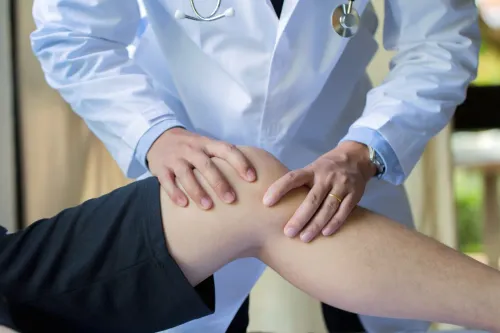
A clinician confirms adhesive capsulitis mainly through examination: both active movement, which you perform, and passive movement, which the clinician guides, are restricted. External rotation is usually the clearest limitation, especially when compared with the opposite shoulder.
The answer to “what does frozen shoulder treatment for include” starts with confirming that the joint capsule, not another structure, is causing the stiffness. The clinician checks shoulder range, strength and pain, then examines your neck because a pinched cervical nerve can send pain into the shoulder and cause weakness or altered sensation.
Clues that suggest another diagnosis include:
- Marked weakness with relatively preserved passive movement, which points towards rotator-cuff disease or a tear.
- Grinding, deformity or sharply reduced movement with arthritis, fracture or previous trauma.
- Clicking, catching or instability that raises concern about a labral injury.
- Neck pain, tingling or pain travelling below the elbow, which favours cervical nerve compression.
A plain shoulder X-ray commonly follows the examination. It can exclude arthritis, fracture and major structural changes, but it does not itself prove frozen shoulder. MRI is not routinely needed for uncomplicated adhesive capsulitis; it is reserved for unexplained findings or suspected rotator-cuff or labral pathology.
The clinician also asks about diabetes and thyroid disease. Diabetes is linked with more severe, prolonged symptoms and a higher chance of recurrence. Physiotherapy input belongs in the plan from the outset, not only after a procedure.
What happens before treatment: pain control and movement work
Start by bringing pain down enough to move the shoulder, then pair that relief with gentle, regular mobility work.
1. Review pain relief with a clinician. Paracetamol may suit some people, while an anti-inflammatory medicine such as ibuprofen or naproxen requires medical advice if you have stomach ulcers, kidney disease, cardiovascular disease, or take blood thinners. Taking an NSAID without checking can cause bleeding, kidney injury, or other complications.
2. Use pain control to create a window for movement. If pain remains too severe for exercises, your clinician may discuss an injection or another option; pain relief alone does not restore normal shoulder motion.
3. Begin supervised physiotherapy with gentle range-of-motion exercises. The therapist may use pendulum movements, assisted forward elevation, and external-rotation stretches, adjusting the intensity to your pain response. Forcing a stiff shoulder can increase irritation and make the next session harder.
4. Repeat a home stretching programme at the prescribed frequency. Short, consistent sessions work better than one aggressive session that leaves the shoulder aching for the rest of the day. Keep moving within a tolerable stretch, and stop if you develop sharp pain, new weakness, numbness, or increasing swelling.
Control conditions such as diabetes or thyroid disease alongside the shoulder plan. They can prolong stiffness and affect how quickly you regain movement.
How doctors choose between injections, hydrodilatation and observation
Observation is appropriate when symptoms are mild, daily function remains manageable, and movement is slowly improving. It avoids procedure risks, but recovery can still take months; doing nothing should not mean abandoning gentle movement and review.
| Option | When it applies | What it can realistically achieve |
|---|---|---|
| Corticosteroid injection | Severe pain limits sleep, stretching or physiotherapy, especially early in the painful phase | Reduces pain for a limited period and can make movement work easier; it does not permanently release the tightened capsule |
| Hydrodilatation | Stiffness remains prominent or progress has stalled despite early non-operative care | Sterile fluid, often with local anaesthetic and corticosteroid, stretches the capsule and may improve pain and range of motion short term; it is not proven uniformly better than other treatments |
| Observation | Pain and function are acceptable, with gradual spontaneous improvement | Avoids intervention while the condition settles, but cannot provide rapid pain relief or guarantee normal movement |
Injection location matters: ask whether ultrasound guidance will improve placement in the intended shoulder compartment. Temporary pain, flushing, infection, bleeding, skin or fat changes and a short-lived rise in blood glucose are recognised risks; diabetes makes glucose monitoring particularly important.
The choice also depends on diabetes or thyroid disease, which are associated with more persistent stiffness. A clinician should reassess you if pain worsens, progress stops, or restricted movement continues despite a structured home and physiotherapy programme.
What happens during a procedure and immediately afterwards
The procedure is usually reserved for stiffness that still limits daily activities after non-operative care. The frozen shoulder treatment process then shifts quickly from releasing the tight capsule to protecting the movement gained.
1. With manipulation under anaesthesia, you are asleep while the surgeon carefully moves the shoulder through its range. This stretches and may deliberately release contracted capsule tissue, but it also carries risks such as fracture, dislocation, rotator-cuff injury or nerve injury.
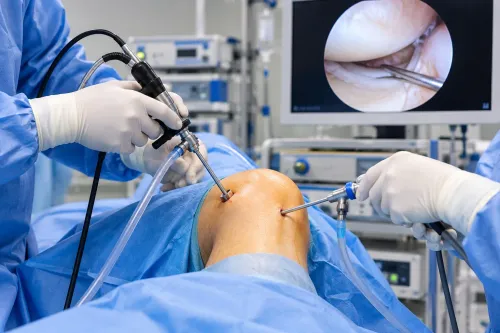
2. During arthroscopic capsular release, the surgeon passes a camera and instruments through small incisions to divide tight areas of the joint capsule. The operation also involves anaesthetic and surgical risks, and pain relief does not mean your strength or movement is immediately normal.
3. In the recovery area, the team checks your pain, circulation, sensation and movement. You may go home the same day or stay overnight, depending on the procedure, your health and the anaesthetic used.
4. A physiotherapist usually begins gentle movement soon afterwards, sometimes on the day of treatment. Early motion helps prevent the capsule from tightening again before healing settles it into the same restricted position.
5. Continue the prescribed exercises regularly rather than forcing a painful stretch. Rehabilitation commonly lasts weeks to months, with exercises adjusted as pain, stiffness and strength change. A sling, pain medicine and ice may be advised for comfort, but prolonged immobilisation can undermine the result.
Reassessment, recovery milestones and choosing specialist care
Recovery is usually measured in months, not weeks. The timeline varies with the phase at diagnosis, diabetes or thyroid disease, symptom severity, and whether stiffness followed manipulation or capsular-release surgery.
| Checkpoint | Approximate timing | What reassessment checks |
|---|---|---|
| Painful freezing | 2–9 months | Pain, sleep, passive and active movement, and whether exercises remain tolerable |
| Frozen phase | 4–12 months | Persistent loss of movement, daily function, strength, and the need to reconsider the diagnosis |
| Thawing phase | 6 months–2 years | Gradual gains in reach, rotation, dressing, and overhead activity |
| After a procedure | Weeks to months | Exercise progress, pain control, capsule tightening, and return of useful motion |
| Urgent review | Any time | Fever, wound redness or drainage, sudden severe pain, a new numb or weak arm, deformity after injury, or breathlessness |
Pain relief does not prove that strength and normal movement have returned. Arrange reassessment if progress stops, exercises sharply increase pain, or stiffness remains function-limiting after the planned rehabilitation period.
An orthopaedic shoulder specialist or sports-medicine physician can manage persistent stiffness and check for rotator-cuff disease, arthritis, cervical nerve compression, or post-traumatic restriction; a physiotherapist usually guides the movement programme. For shoulder stiffness treatment Mumbai patients comparing local care, a frozen shoulder specialist Vile Parle option should offer both diagnostic reassessment and coordinated rehabilitation.
Dr Dhirav Shah- Orthopaedic Surgeon 8104619499 can assess whether ongoing stiffness needs continued therapy, further imaging, injection, or a procedural discussion.
Related service
Frozen Shoulder Treatment In frozen shoulder or adhesive capsulitis, patients suffer from stiffness of shoulder joint with pain, and this condition worsens with time. View service → |
Frequently asked questions
How is frozen shoulder confirmed during the first consultation?
The clinician compares your active and passive shoulder movement with the opposite side. Restricted external rotation is a key finding, while imaging helps rule out other causes of stiffness.
What does frozen shoulder treatment include before a procedure?
Treatment may begin with pain control and guided movement work so you can perform stretching without worsening symptoms. Your clinician adjusts exercises to your pain and range of motion.
How do doctors choose between injections, hydrodilatation and observation?
The choice depends on pain severity, stiffness, response to initial treatment and how much daily function is affected. Observation suits symptoms that are manageable and improving; injections or hydrodilatation may be discussed when pain and restricted movement persist.
What happens after frozen shoulder treatment?
You receive instructions for pain control and shoulder movement, then return for reassessment. Recovery is tracked through pain, range of motion and practical tasks such as dressing or reaching overhead.
Keywords